Würstchen v2
| Model | Source | Revision | Weight license | Parity (CPU, fp32) |
|---|---|---|---|---|
wuerstchen-v2 |
warp-ai/wuerstchen | c3da414 |
mit | Verified |
Catalog: wuerstchen ·
Models: wuerstchen-v2 · Task: t2i
Architecture. Würstchen v2 is the model that Stable Cascade grew out of, and it works the same way in three stages. The prior (stage C) denoises a 16-channel image embedding about 42.67 times smaller than the output, conditioned on the CLIP ViT-bigG text states. The decoder (stage B, a DiffNeXt U-Net) denoises a 4-channel latent about 10.67 times smaller than the output, conditioned on the prior's embedding and on the text states of a second text encoder, CLIP ViT-H. A Paella VQGAN (stage A) decodes that latent to pixels. Both stages use the DDPM Wuerstchen scheduler.
The differences from Stable Cascade are in the networks and the conditioning. The
prior is a stack of 32 residual, timestep and attention blocks at a single resolution (width 1536)
rather than the two-level U-Net. The decoder has four resolution levels and takes the whole
sequence of text states, not a pooled text embedding. The decoder has its own text encoder, so
wuerstchen-v2 loads two CLIP text models, and each stage encodes the prompt with its own: the
last hidden state after the final layer norm, with the padding masked out. The prior's output is
rescaled as latents * 42 - 1 before it conditions the decoder. The prior uses the batched-matmul
attention of the diffusers default processor and the decoder uses fused scaled-dot-product
attention, which is what the reference does and what exact parity requires. The sampling loop,
the shared random generator and the decoding follow Stable Cascade.
Usage.
from imagehub import pipeline

with pipeline(
    "t2i", backend="wuerstchen-v2", model="checkpoints/wuerstchen-v2", device="mps"
) as pipe:
    result = pipe("a cat, oil painting", seed=42)
    result.images[0].save("cat.png")
Settings. The prior defaults to 60 steps and guidance 4.0; the decoder defaults to 12 steps,
guidance 0.0 and 512×512 output. The supported options are steps, guidance, prior_steps,
prior_guidance, width, height, seed and negative_prompt. The reference sizes the latents as
ceil(size / 42.67) for the prior and int(that * 10.67) for the decoder, and the decoder needs a
latent size that is a multiple of 16, so sizes are checked before loading and multiples of 128
always work; the output can differ slightly from the requested size for other values, and the
result metadata records the size produced. Decoder guidance above 1 does not depend on the prior
guidance, because the decoder encodes its own negative prompt. Unrecognized settings raise an error.
Memory. In float32 the weights take about 4.0 GB for the prior (1.0B parameters), 4.2 GB for the decoder (1.06B), 2.8 GB for the ViT-bigG text encoder, 1.4 GB for the ViT-H text encoder and 0.07 GB for stage A, about 12.5 GB in all.
Seed compatibility. On CPU, the same seed and settings give the same image as diffusers
WuerstchenCombinedPipeline with generator=torch.Generator("cpu").manual_seed(seed)
(validation). Both stages draw from the one generator. MPS and CUDA runs are smoke
tests only; there is no claim of exact equality on these devices.
Out of scope. Only text-to-image is supported, for one prompt at a time. Image variation, custom timestep lists, precomputed prompt embeddings and fp16/bf16 parity are not implemented.
License. The decoder and prior weights are published under the MIT license. imagehub does not distribute weights.
Reference and imagehub, side by side
Drag the slider. Left is the recorded reference, right is imagehub, from the same seed, on CPU in float32.
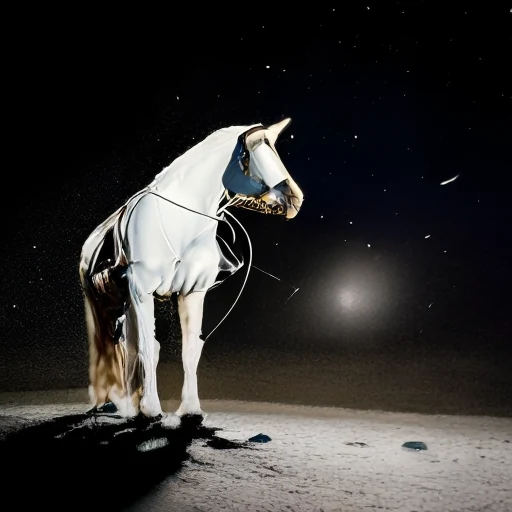
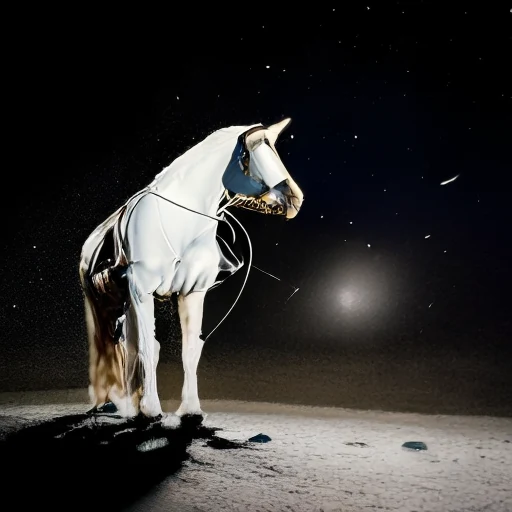 referenceimagehub