GLM-Image
| Model | Source | Revision | Weight license | Parity (CPU, fp32) |
|---|---|---|---|---|
glm-image |
zai-org/GLM-Image | 2c433cc |
MIT | Verified |
Catalog: glm-image ·
Models: glm-image · Task: t2i
Architecture. GLM-Image generates in two stages. A 9B autoregressive model (the GLM-4 decoder with interleaved three-axis rotary positions and a vision head over 16,512 tokens) reads the prompt and samples discrete image tokens: first a low-resolution preview (about 16 tokens on the long side) that fixes the layout, then the full grid at one token per 32×32 pixels. A 7B single-stream diffusion transformer (30 blocks, width 4096, CogView4-style blocks with AdaLN-zero modulation) then denoises 16-channel VAE latents. It receives the sampled tokens, upsampled two times to the latent patch grid and projected into the image stream, together with ByT5 glyph embeddings of the text the prompt puts in quotation marks (single, double, curly and 「」 quotes). For classifier-free guidance the unconditional pass drops the tokens and uses the glyph embedding of the empty string. The scheduler is flow-match Euler with linear dynamic shifting.
Usage.
from imagehub import pipeline

with pipeline("t2i", backend="glm-image", model="checkpoints/glm-image", device="mps") as pipe:
    result = pipe('A neon sign that reads "Open Late" on a rainy street', seed=42)
    result.images[0].save("sign.png")
Settings. Defaults are 50 steps, guidance 1.5 (guidance is active above 1), 1024×1024 and a
glyph sequence limit of 2048 bytes. width and height must be multiples of 32. The supported
options are steps, guidance, width, height, seed, max_sequence_length and latents.
The seed controls both the sampled image tokens and the initial noise, so one seed gives one
image; latents replaces only the initial noise. There is no negative prompt (the reference
always uses the empty string). Unrecognized settings raise an error.
Memory. The published weights are bfloat16. In float32 the autoregressive text tower takes about 36 GB (the vision tower and VQ encoder in the same files are not loaded), the transformer 28 GB, the ByT5 encoder 0.9 GB and the VAE 1.6 GB. The backend loads the stages one after another and releases each, so the peak is the autoregressive model alone, and every request reloads them. Generating the 1,280 tokens of a 1024×1024 image takes one pass of the 9B model per token.
Seed compatibility. On CPU, the same seed and settings give the same image as diffusers
GlmImagePipeline with generator=torch.Generator("cpu").manual_seed(seed)
(validation). The token sampling consumes the CPU random stream in the same order
as transformers' generate. MPS and CUDA runs are smoke tests only.
Out of scope. Only text-to-image is supported, for one prompt at a time. The reference also accepts condition images for editing and style transfer; that needs the 40-block vision tower, the VQ encoder, the VAE encoder and the decoder's key/value cache for the reference tokens, and is not implemented (the catalog entry has no image input). Batches, precomputed prompt embeddings or prior tokens, custom timesteps and fp16/bf16 parity are not implemented.
License. The weights are published under the MIT license. imagehub does not distribute weights.
Reference and imagehub, side by side
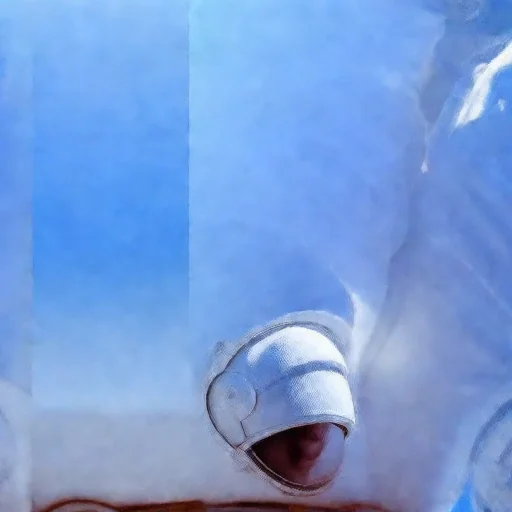
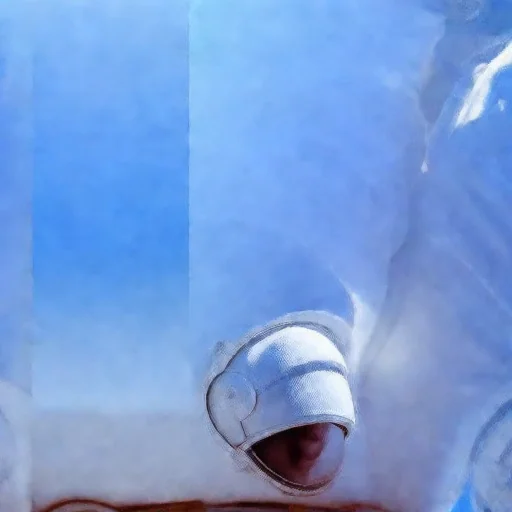
Drag the slider. Left is the recorded reference, right is imagehub, from the same seed, on CPU in float32.
 referenceimagehub